February 8 - March 13, 2026
Andrea Sanders - What Remains | Andrea Evans - Split Level | Cody Barber | Al & Sue Ravitz - Related Work from our Collection
OPENING RECEPTION, SUNDAY, FEBRUARY 8th, 2026, 1-4pm
WAITING ROOM
Andrea Sanders - What Remains
“There is a secret bond between slowness and memory, between speed and forgetting.”
-Milan Kundera, Slowness
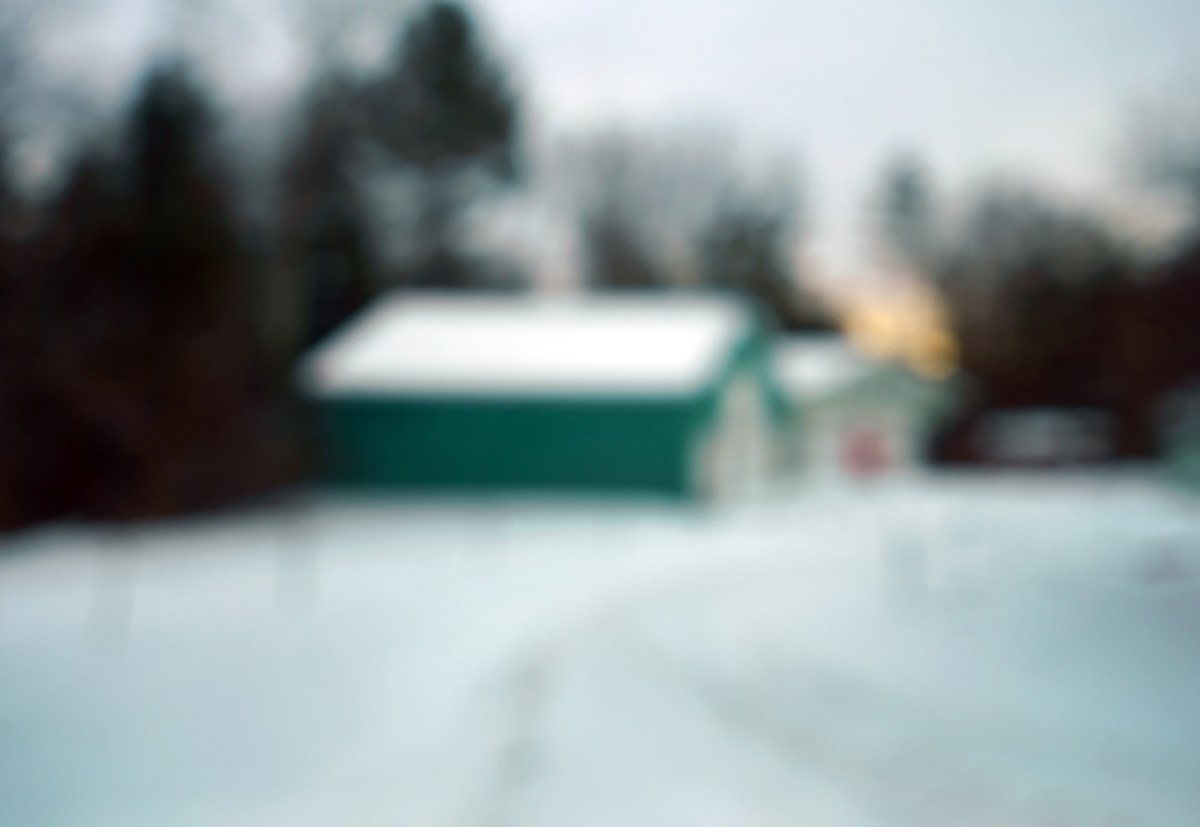
My work is about permanence and change, time and remembrance. These recent images are from an ongoing series of photographs shot from moving cars and trains. They speak to our futile attempt to stop time, to be still. We look out from a window and imagine what lives are being lived in the houses we’re passing by, or notice how the light falls just so at that instant. We’re moving too fast to focus and we’re left with just soft impressions, feelings without details. I’m drawn to houses that seem both familiar and vague; places that feel like a memory of somewhere, someone, a stretch of time or a singular moment.
The French philosopher, Bachelard, wrote that “a house is a tool with which to confront the cosmos. It helps us to say, ‘I am an inhabitant of this world, in spite of the world.’” And just as a house is physical proof that we were there, so is a photograph. But while the image on paper that is a photograph may help us to remember, it can never bring us back, or bring those lost back to us. I try to convey that sense of “then and now” with my work. In contrast to the still, solid architecture we surround ourselves with, and in contrast to the frozen photographs which we treasure although they are simply illusions, our lives are, for better or worse, in constant and unstoppable forward motion.
Andrea Sanders was born in New York and grew up in the suburbs of New York City. After graduating from The University of Virginia in 1991 with a Bachelor of Arts in both Fine Art and English Literature, she was accepted to the Vermont Studio Center where she focused on photographic mixed media work. She received her Masters in Fine Art from the Photography & Related Media Department at the School of Visual Arts in Manhattan, culminating in an exhibition at the Visual Arts Gallery in Soho. Andrea was then accepted to the Bronx Museum’s Artists in the Marketplace seminar program, resulting in a group museum exhibition. She has since exhibited in group shows and consistently participated in Dumbo Open Studios (while also cultivating a decades-long career as a creative director). She shares a studio with three other artists in Dumbo, Brooklyn and her work is currently comprised of digital photographic images.
MELANIE’S OFFICE
Andrea Evans - Split Level
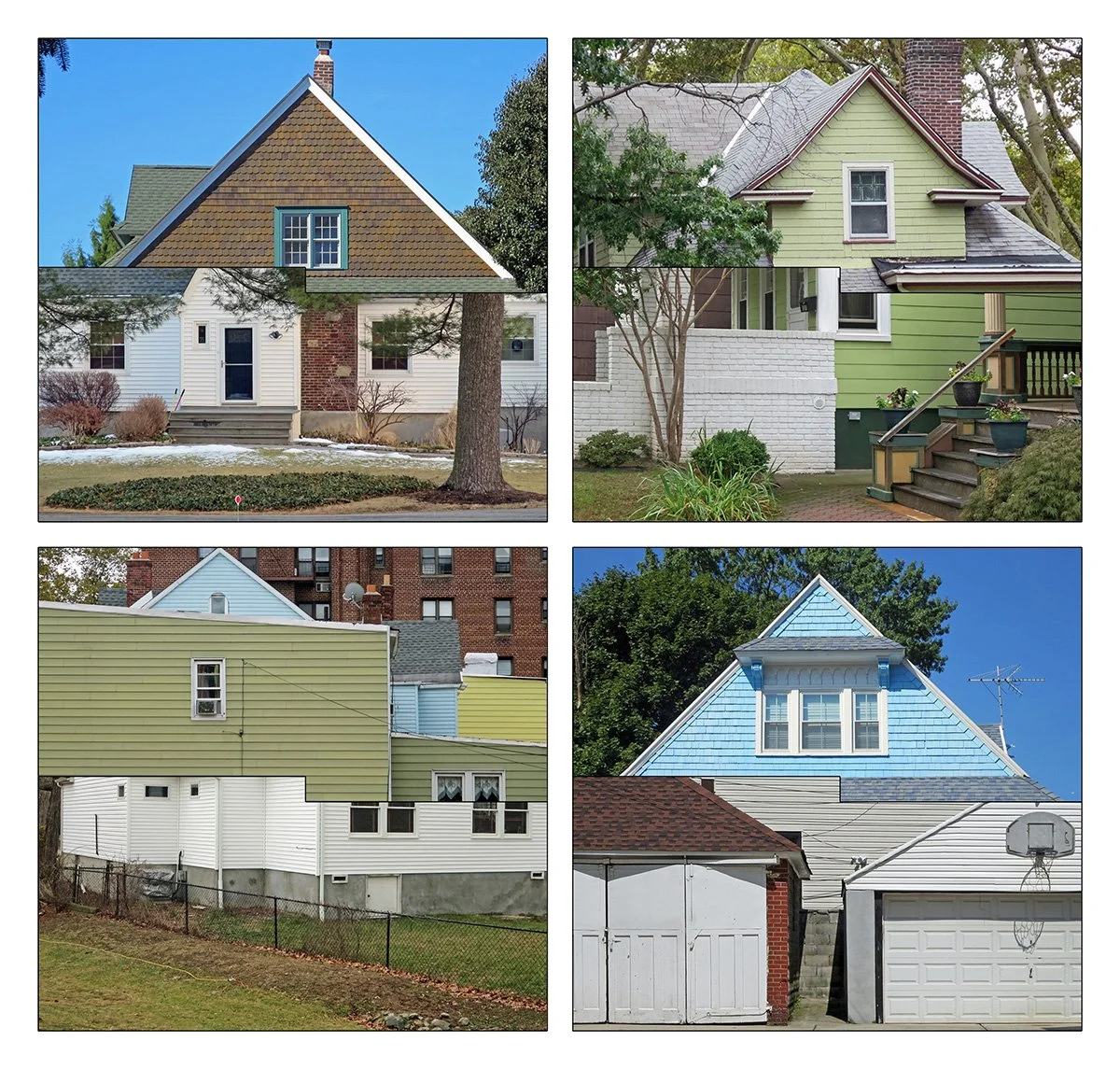
Split Level is a large inkjet photo series of juxtaposed houses and dwellings, one on top of the other, separated by a stepped line. All of the photos were taken in and around New York City with a small point-and-shoot camera. As an artist, I use photographic images, but don’t consider myself a photographer.
I feel my interest in houses comes from a primal source, it’s one of the first things we learn to draw. I’ve long perceived houses as sculptures, probably from seeing Joel Shapiro’s simplified house sculptures when I was in art school. I was also inspired by Dan Graham’s photo series Tract Houses from 1966.
To make Split Level, I sorted through photos I had taken and used for other projects and began cropping them into upper and lower sections. The key to juxtaposing them turned out to be using an uneven line, so they interact. I used randomness to create surprising combinations that wouldn’t have been immediately obvious to me. I work in large series and randomness is often a component in my explorations of repetition, like and unlike, and harmony and dissonance.
Andrea Evans lives and works in New York City. She grew up near Detroit, Michigan and received a BFA from the University of Michigan School of Art in 1976. She has shown at Artists Space, White Columns and PPOW, and had solo exhibitions at Postmasters Gallery, NYC; Real Art Ways, Hartford, CT.; and a White Room at White Columns.Presently she assists in managing the art and archives of the estate of artists Geoffrey Hendricks and Brian Buczak, as well as being artist-in-residence at the townhouse of the estate.
AL’S OFFICE and SHELF
Cody Barber
Having studied journalism, my favorite part of conducting an interview was scoping out the chairs in a room. A young scavenger, hungry for visual excitement in the flatlands/panhandle of Texas, I liked looking for chairs more than I did writing. The chairs that excited me the most were see-through and made of wire mesh. I started collecting those chairs, which were typically in bad shape. I learned the best way to re-treat them was with powder coating.
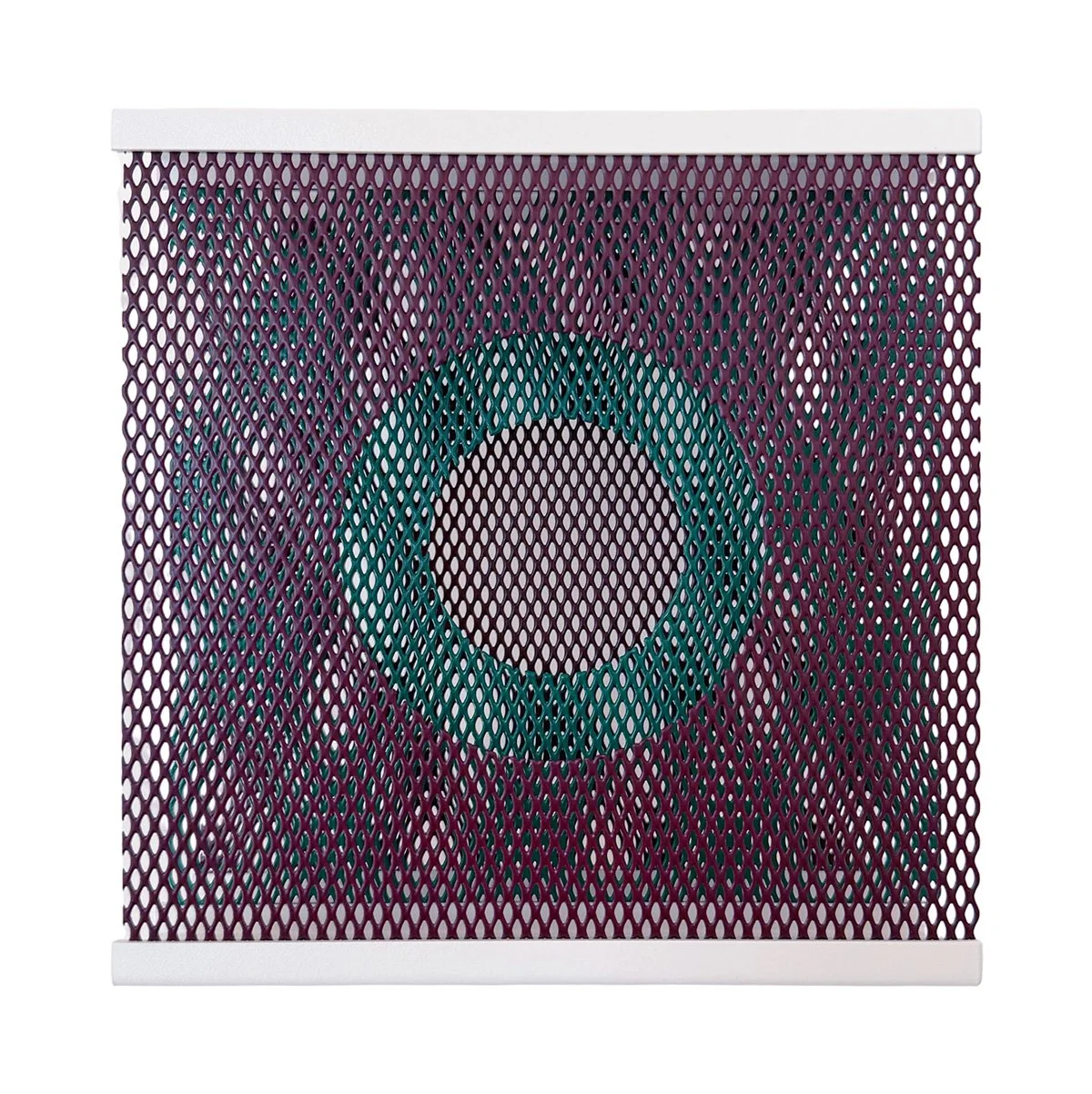
The six sculptures I made for Sue (using wire mesh) are a direct result of chair maintenance. The works have parts that I need to assemble. I think of legs and feet. The graphic moiré patterns they exhibit are visually exciting; spirited backrests. The powder coating, which I learned first for the chairs, is now the method I use to paint all of my art. What happens with color when I layer the mesh is something new that I continue to comprehend and observe – none of which occurs while sitting. Please hang the art at your own standing eye level.
Born in Lubbock, TX (1986) and now based in Marfa, Cody Barber has spent the last two decades turning curiosity into color. After studying mass communications at Texas Tech, Cody began experimenting with powder coating under the guidance of friend and mentor Jonathan Shelby. Cody has had solo exhibitions in Mexico City at Fenomena, the Texas Tech School of Architecture, and has taken on large-scale architectural powder coating projects in the Big Bend region. Recently, Cody debuted “Moiré Work” at the Wrong Gallery in Marfa.
AL’S OFFICE
AL & SUE RAVITZ - Related Work from our Collection
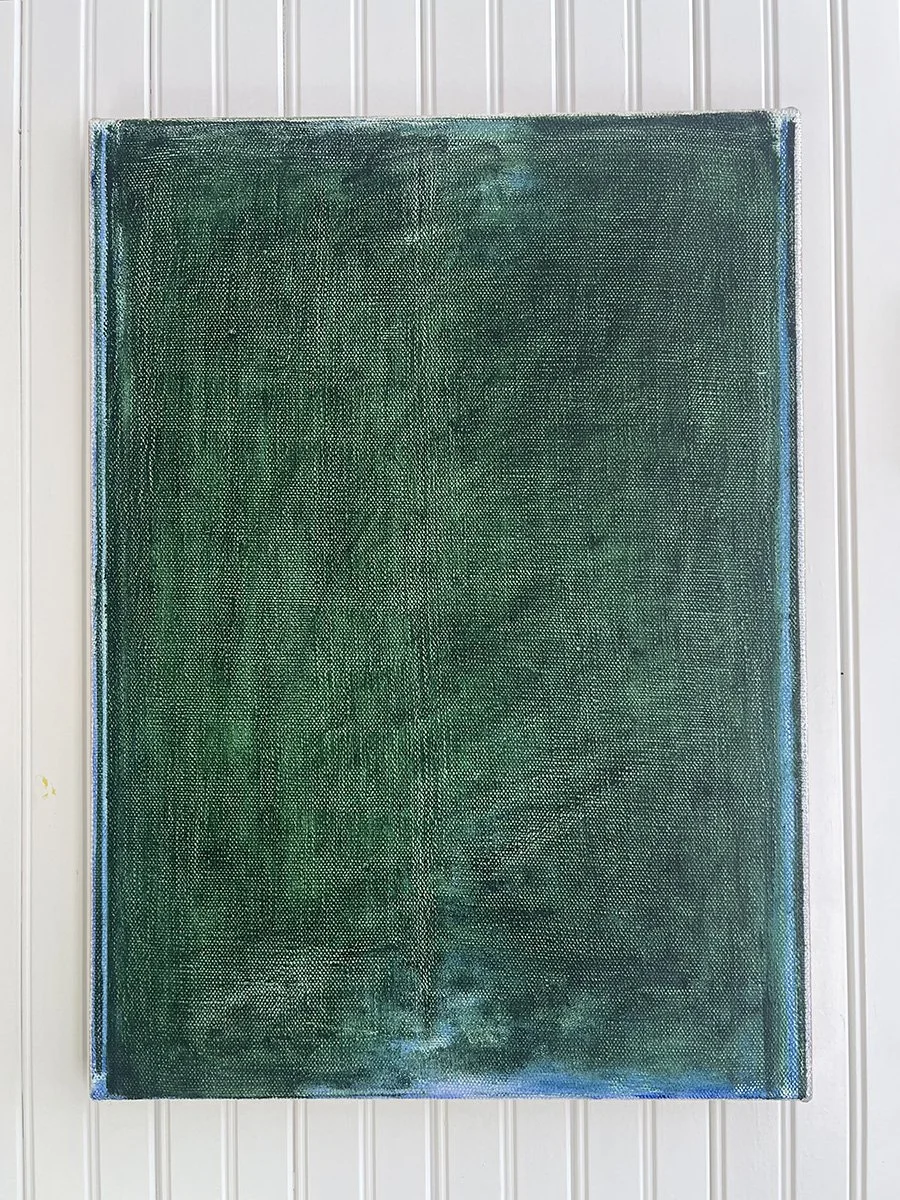
Perception largely serves an evolutionary function: clarity allows us to respond effectively to adaptive challenges. When things get blurry, then, we may discount their significance. But if there is an invisible world, access to that domain only becomes possible when clarity breaks down. What is lost in adaptive certainty may be gained in another kind of seeing. So ... settle into the whole show, including the works from our collection by Tom Chamberlain, Marcia Hafif, Paola Oxoa, Michael E Smith, Daniel Wenk, Yui Yaegashi, and John Zurier.
###
For press inquiries, please contact Sue Ravitz: info@57w57arts.com